Storing Leather Properly: Humidity, Light, Rolls and Records
6 August 2026 · 10 min read · Material Calculation
Leather that has been stored badly is expensive material turned into scrap. Simple storage discipline protects both the hide and your ability to find the right piece when you need it.
Leather is still a biological material
Tanning stabilises hide against decay but does not make it inert. Vegetable tanned leather in particular continues to respond to its environment for its whole life: it takes up and gives off moisture, it oxidises and darkens in light, its oils migrate and eventually evaporate, and under the wrong conditions it supports mould as readily as any other organic material.
This means that a hide in storage is slowly changing whether or not you use it, and the direction of that change is under your control. A hide stored well for two years is essentially the material you bought. The same hide stored badly can arrive at the cutting mat cracked along the fold, mottled with mould bloom, or so dried out that it will not case evenly.
For anyone holding more than a couple of hides at a time this is a real financial exposure. Leather is among the most expensive inputs in the craft, and storage is the cheapest insurance available.
Humidity is the main variable
The comfortable band for leather storage is roughly forty to sixty per cent relative humidity, with stability mattering nearly as much as the absolute figure. Below about thirty-five per cent the leather loses bound moisture, stiffens and becomes brittle at flex points. Above about sixty-five per cent, and especially above seventy, mould becomes a live risk on vegetable tanned surfaces.
Buy a cheap hygrometer and put it where the leather actually is, not in the middle of the room. Garages, basements and outbuildings routinely run twenty points away from the house they are attached to, and a shelf against an external wall can be very different from one in the middle of the space.
Remediation is straightforward once you know the number. A small dehumidifier handles a damp workshop; a humidifier or simply a tray of water in a heated dry room handles the opposite. Avoid storing leather directly against concrete floors or exterior walls, which act as moisture bridges regardless of what the room reading says.
Roll, stack or hang
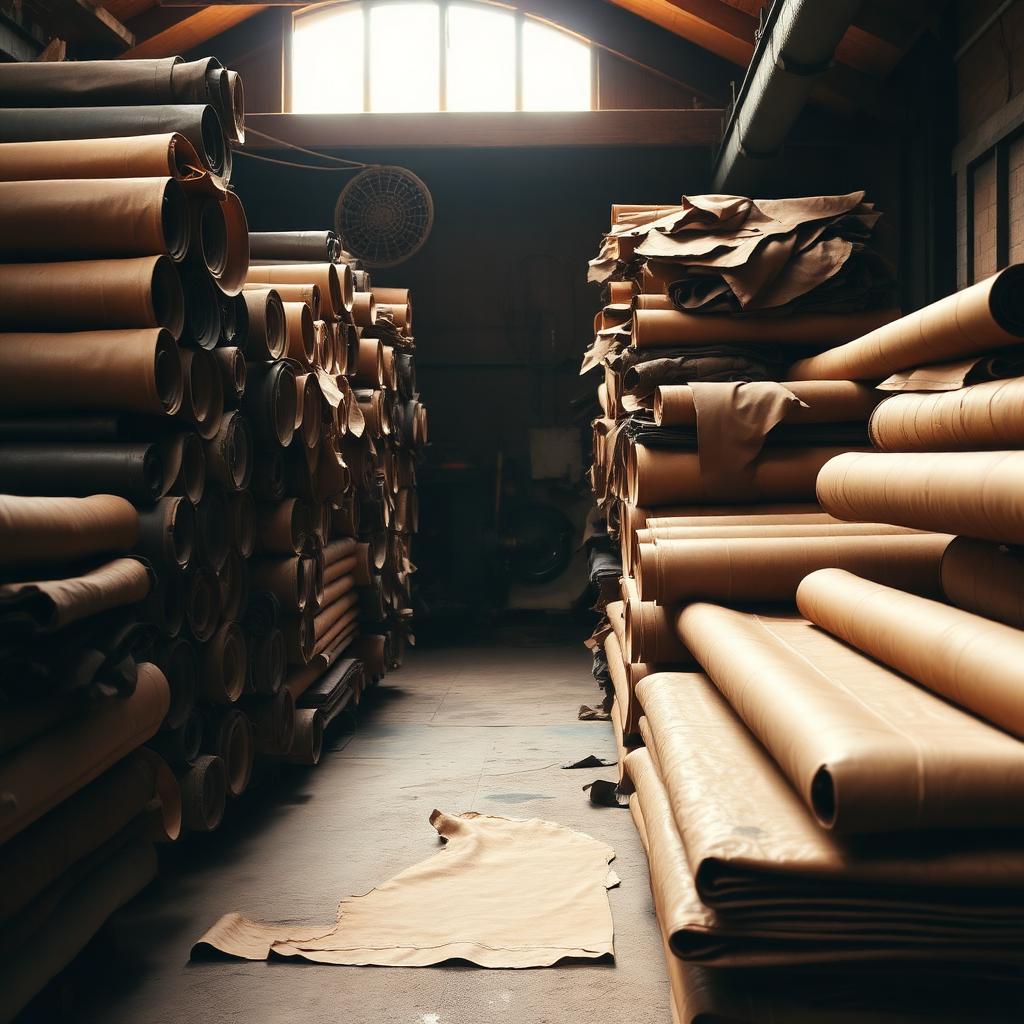
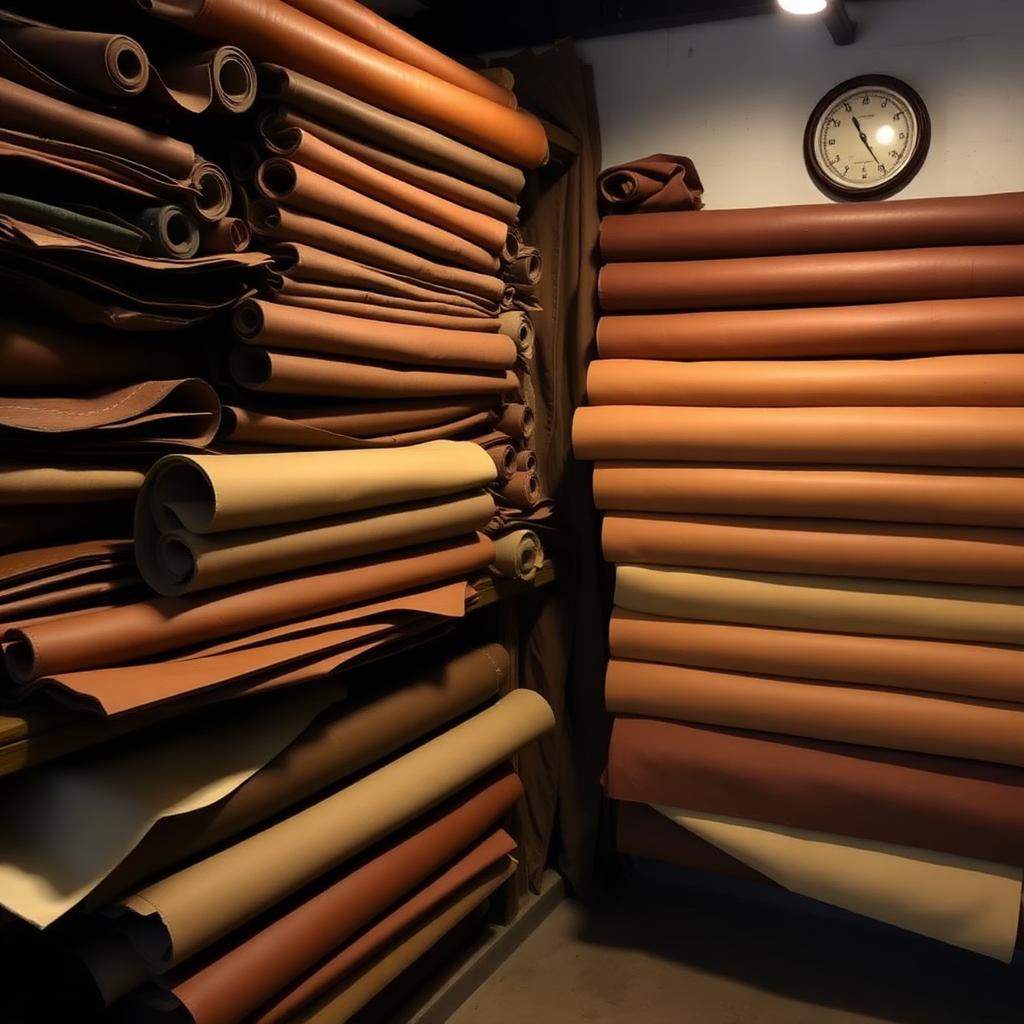
Rolling is the default for whole hides and large sides. Roll grain side out around a wide-diameter core — a cardboard tube of at least a hundred millimetres, not a broom handle — so the grain is in gentle tension rather than compression. A tight roll on a small core creates permanent creases that will show through any finish.
Flat stacking suits shoulders, panels and offcuts, provided the stack is genuinely flat and not too tall. The weight of a deep pile compresses the lower pieces, and any grit trapped between layers will emboss itself into the grain over months. Interleave with acid-free paper if you are storing finished or delicate leathers.
Hanging over a wide rail works well for medium hides in a shop with space, and has the advantage that you can see what you own at a glance. The rail must be wide and padded; a thin bar creates a hard fold line that becomes a crack. Never hang leather from clips that bite into a small area of a heavy hide.
Light, heat and contact
Direct sunlight tans leather further and unevenly. A hide with one edge catching afternoon sun through a window for a season will show a distinct colour band that no dye will hide. Store away from windows, or cover stacks with a cotton dust sheet — cotton, because it breathes.
Plastic does not breathe, and this is the single most common storage mistake. Leather sealed in polythene traps its own moisture against the surface and mould follows within weeks in a warm room. If a hide arrives wrapped in plastic, unwrap it the day it arrives.
Heat accelerates everything, including the migration and eventual loss of the oils and waxes that keep the fibre supple. Avoid storing near radiators, heaters or in a loft that swings from freezing to thirty-five degrees across a year. A cool, stable, dark, ventilated space is the whole specification.
Dealing with mould
Mould on vegetable tanned leather presents as a fine white or grey bloom, often first on the flesh side. Catch it early and it is recoverable: take the hide outside, brush the bloom off with a dry soft brush so the spores do not spread through your workshop, then wipe the surface with a cloth lightly dampened with a diluted alcohol solution and let it dry slowly away from heat.
Then fix the cause, because mould is a symptom of storage conditions and it will return. Check the hygrometer, improve air circulation, and separate the affected hide from the rest of the stock until you are confident it is stable.
Deep mould that has penetrated the fibre, or that has left permanent staining under the grain, is generally not recoverable for visible panels. Downgrade the affected areas to test pieces, linings and internal stiffeners rather than throwing the whole hide away.
Keeping records of what you have
A workshop with a dozen hides and a bin of offcuts almost always buys material it already owns, because nobody can remember what is in the bottom of the stack. A simple inventory fixes this: for each piece, record the tannage, the thickness, the approximate usable area, the colour and where it is stored.
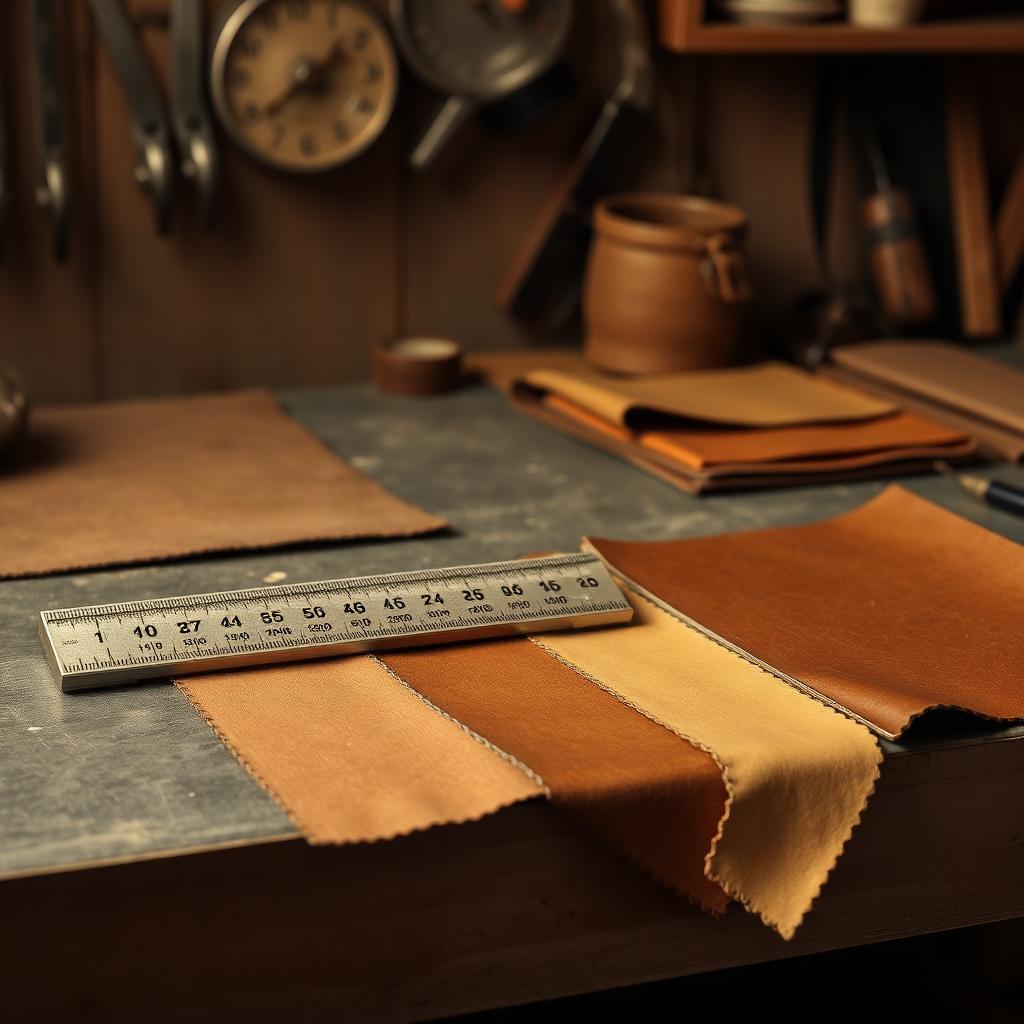
Area is the field people skip and later need most. Suppliers quote in square feet in some markets and square decimetres or square metres in others, and mixing units across an inventory makes it useless. Pick one unit and convert everything into it on entry — the area converter on this site handles the arithmetic.
Record offcuts too, at least by size band. Knowing you already hold enough 4 mm scrap for twenty card holders changes what you cut from a full hide, and the consumption estimator becomes far more useful when its inputs reflect what is actually on the shelf rather than what you think might be.
A storage routine that takes ten minutes a month
Once a month, read the hygrometer and note it. A single reading is weather; twelve readings are a picture of your workshop across the seasons and will tell you whether you need to intervene at all.
At the same time, unroll and re-roll anything that has been stored for more than a few months. This relieves set creases, lets you inspect for early mould, and reminds you what you own. Refold along a different line if a piece has been folded, which it should not have been.
Finally, keep the inventory current when material comes in and goes out. It is a two-minute habit that turns storage from a pile into a resource, and it is the difference between planning a project around what you have and discovering the shortfall halfway through the cut.
Tools mentioned in this article
- Leather Consumption Estimator — Estimate the hide area a project needs before you buy leather.
- Leather Area Unit Converter — Convert hide area between square feet, dm² and cm².
- Leather Care Interval Calculator — Get a conditioning schedule matched to leather type and climate.