Leather Thickness: Making Sense of Ounces, Irons and Millimetres
14 July 2026 · 7 min read · Material Calculation
Why the same leather is 6 oz in one catalogue and 2.4 mm in another, and how to choose weight for the piece you are actually making.
Three systems, one piece of leather
Leather thickness is described in at least three different ways depending on where you shop. North American suppliers quote ounces. European tanneries quote millimetres. Shoemakers still occasionally use irons. All three describe the same physical property, and a maker sourcing internationally needs to move between them without thinking twice.
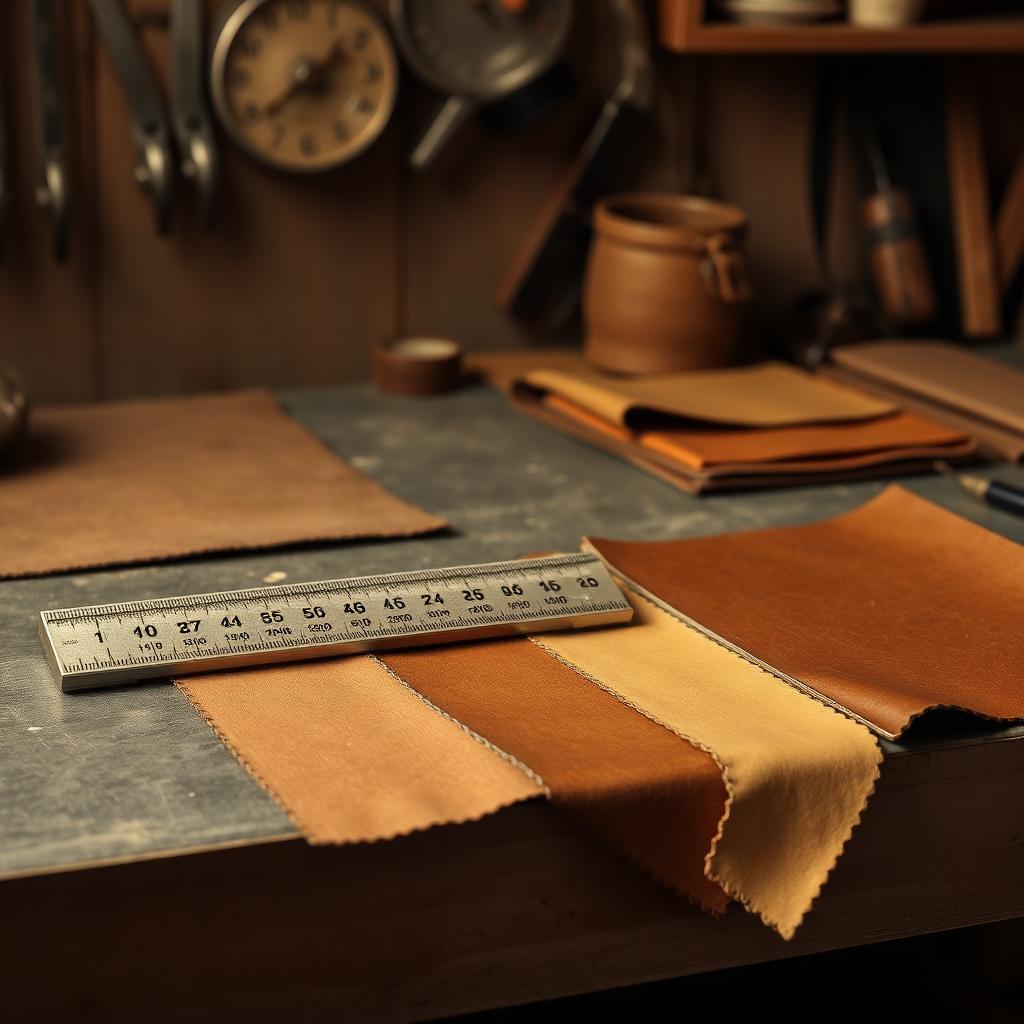
The ounce is the most confusing of the three because it sounds like a weight and behaves like a length. One ounce of leather weight corresponds to one sixty-fourth of an inch of thickness, or approximately 0.4 millimetres. It derives from the historic weight of a square foot of leather at that thickness, which is why a 6 oz leather is not six ounces of anything you can put on a scale — it is 6 ⁄ 64 of an inch, roughly 2.4 mm.
The iron, used mainly for shoe soles, is 1 ⁄ 48 of an inch, about 0.53 mm. A four-iron sole is therefore just over 2 mm thick. It appears rarely outside footwear but shows up unannounced in older pattern books and confuses everyone the first time.
Ranges, not numbers
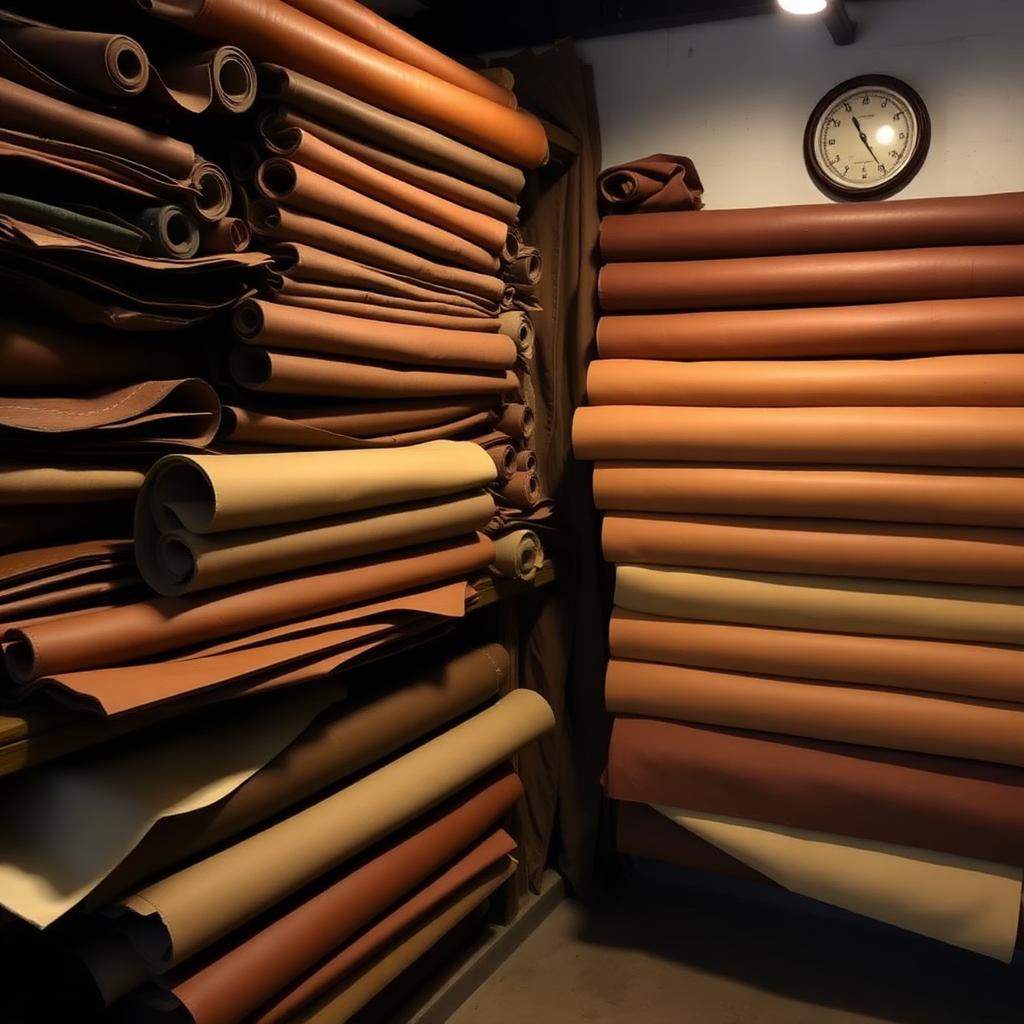
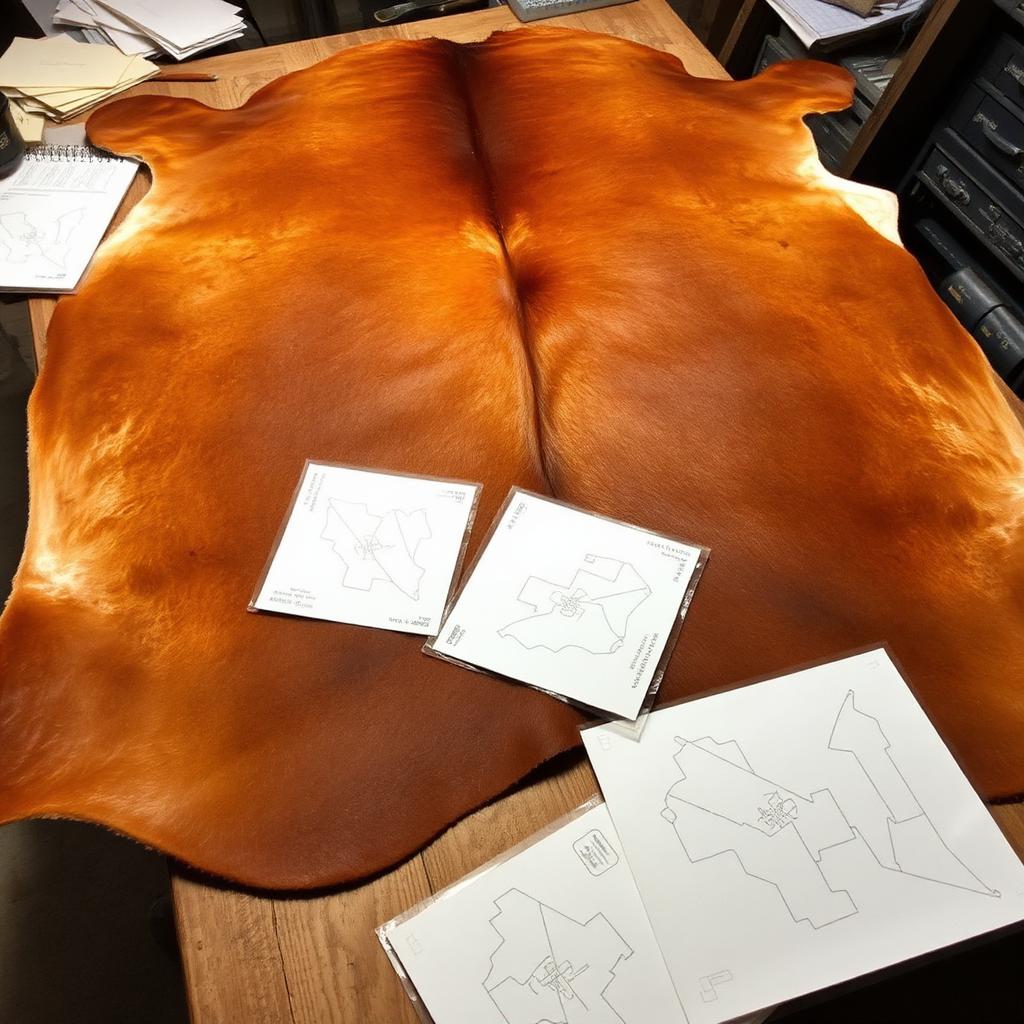
Suppliers almost always sell in ranges: 4–5 oz, 5–6 oz, 8–9 oz. This is not sloppiness. Leather is a natural material and thickness varies across a single hide by a surprising margin — the shoulder of a side can be half a millimetre thicker than the belly of the same animal.
The practical consequence is that you should never design a piece that only works at exactly 2.0 mm. If your card slots depend on precise stacking, buy slightly thick and skive down, or split the leather to a consistent thickness. If your pattern must accommodate variation, design tolerance into it: a wallet spine that works from 1.6 to 2.2 mm will survive whatever the hide gives you.
Always measure the piece you are cutting, not the label on the shelf. A cheap dial gauge costs less than a single hide and will tell you the truth in two seconds. Measure at several points across the panel; if the variation exceeds about 0.3 mm on a piece where thickness matters, move the pattern to a more consistent area of the hide.
Choosing weight by function
For wallets, card holders and interior linings, 1.0 to 1.4 mm (roughly 2.5 to 3.5 oz) keeps the finished item slim and lets multiple layers fold without bulk. Anything heavier and a bifold becomes a wedge that will not sit in a pocket.
Bag panels generally sit between 1.6 and 2.4 mm (4 to 6 oz). Thinner leathers need reinforcement or lining to hold their shape; thicker leathers make crisp structured bags but demand serious hand strength at the stitching pony and heavier hardware.
Belts and straps want 3.2 to 4.4 mm (8 to 11 oz), often achieved by stacking two thinner layers for a dress belt with a lining. A single-layer work belt below 3 mm will roll and curl within a season of daily wear.
Sheaths, holsters and moulded work start at 4 mm and climb from there. Moulding requires enough substance for the wet-formed shape to hold; thin leather simply relaxes back toward flat as it dries.
Stacking, skiving and the maths of layers
Multi-layer construction rarely produces the sum you expect. Two 2 mm panels glued and stitched compress slightly under the stitch tension, so a 4 mm calculation may finish at 3.7 mm. That difference matters when you are sizing a buckle slot or a rivet post — a 4 mm post through a 3.7 mm stack leaves a gap that will loosen.
Skiving changes the picture again. A skived seam allowance may drop from 2 mm to 0.6 mm across a twelve millimetre band, which is exactly the point of skiving: it removes bulk where layers overlap so the finished edge stays elegant. Plan skives into your thickness budget rather than treating them as a finishing afterthought.
When ordering hardware, always specify the finished stack thickness after compression and skiving, not the nominal sum of the layers. Rivet and screw lengths are unforgiving.
A conversion habit worth keeping
Write both units on every pattern. If your notes say '5–6 oz (2.0–2.4 mm)', you can order from any supplier on any continent without recalculating, and you can compare quotes honestly. Suppliers who quote only in ounces are frequently selling to a market that assumes a particular tannery standard; suppliers quoting millimetres are usually more precise.
The thickness converter on this site handles ounces, irons, millimetres and inches in both directions. It takes five seconds and removes an entire category of ordering error — the kind that arrives as a parcel of leather half the weight you expected, three weeks after you needed it.