Estimating Hide Consumption Without Wasting Half a Side
21 July 2026 · 8 min read · Material Calculation
Nesting, grain direction, belly waste and the real reason your 12 square foot order only yielded 8 usable feet.
The gap between paper area and hide area
Add up the panels of a medium tote and you might arrive at 9 square feet of leather. Order 9 square feet and you will not finish the bag. This is the single most common budgeting mistake in leatherwork, and it catches experienced makers as reliably as beginners, because the arithmetic is correct — it is the assumption underneath it that is wrong.
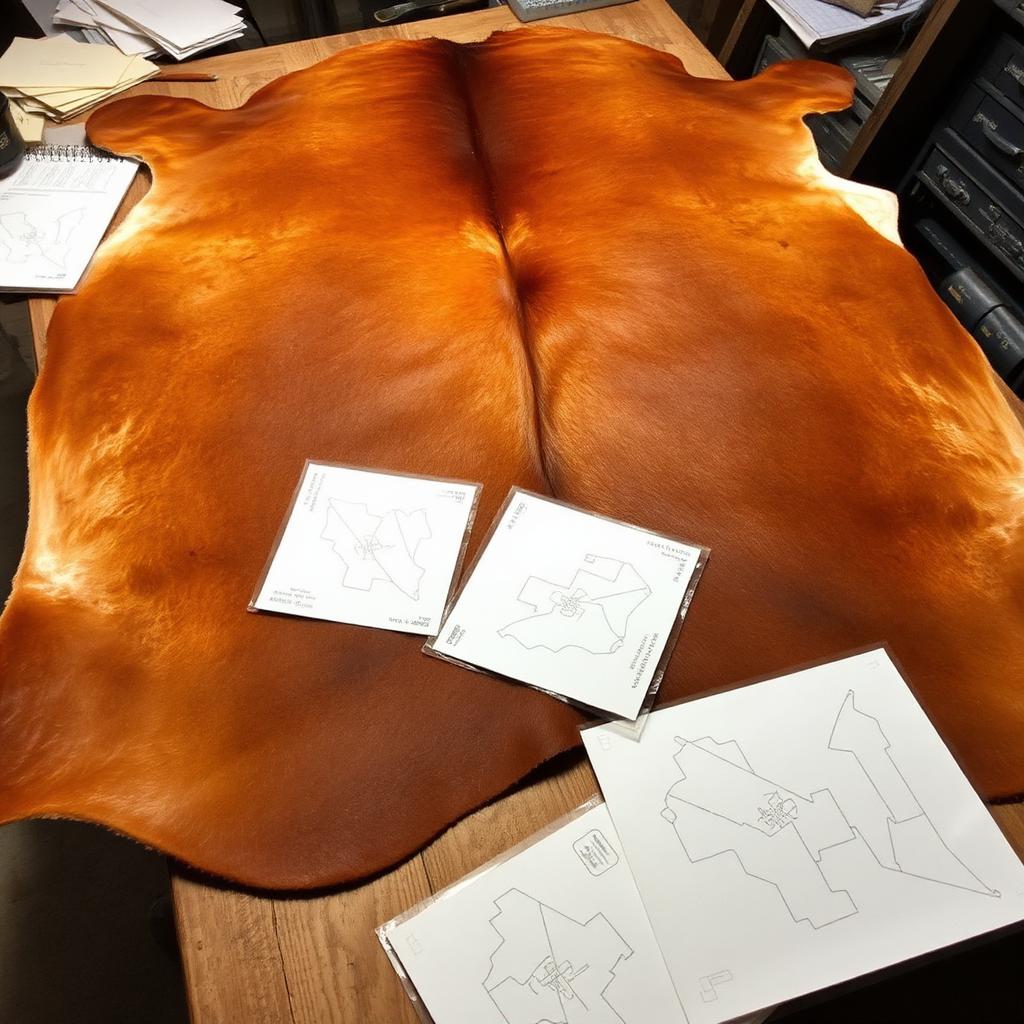
Pattern area assumes a rectangle of perfectly uniform material. A hide is neither rectangular nor uniform. It has an irregular outline, thin bellies, a stiff butt, scars, brands, insect bites and range marks, and a grain direction that changes how a panel behaves once it is stitched. Every one of those realities converts part of your purchased area into something you cannot use for this particular project.
Where the area actually goes
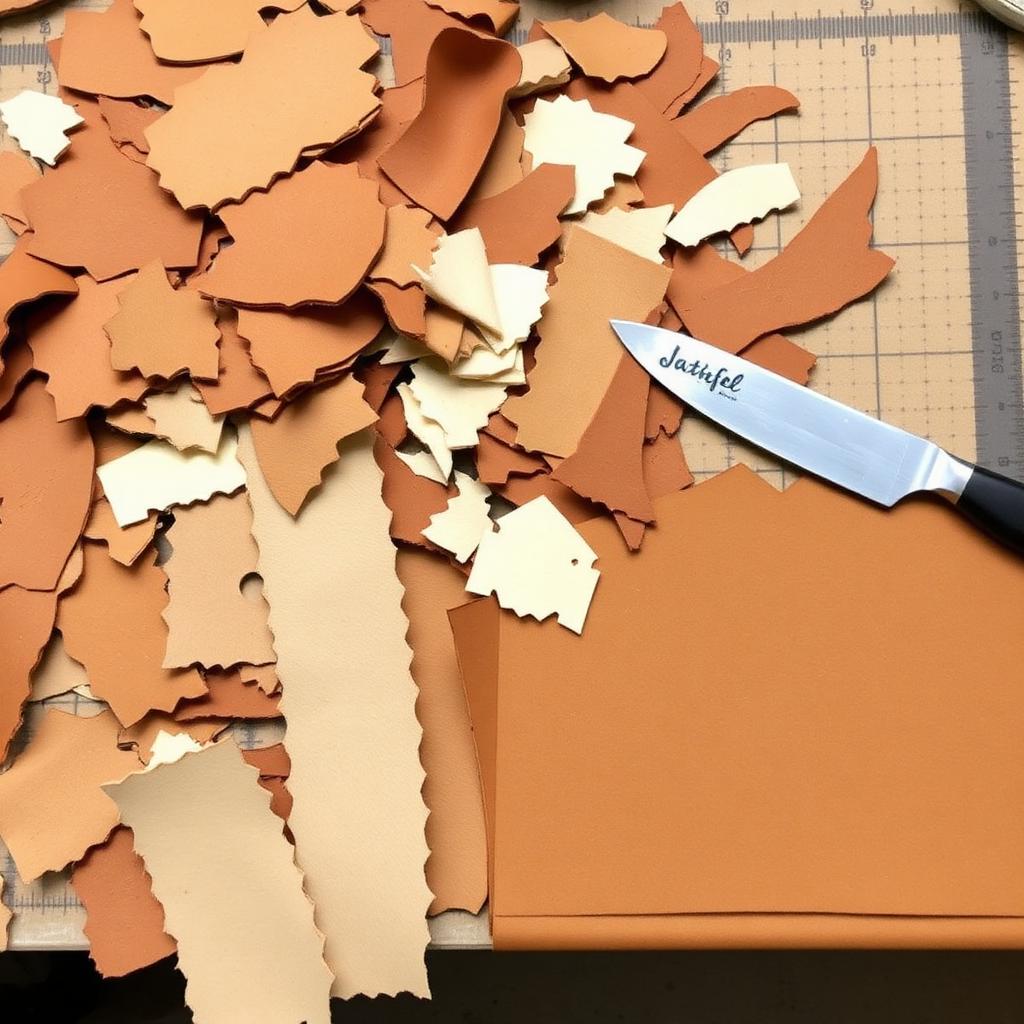
Start with the outline. A side of vegetable tanned cowhide is roughly kidney-shaped. Even with perfect nesting, the curved perimeter leaves narrow crescents that fit nothing larger than a keyring fob. On a typical side, five to eight per cent of the measured area is lost to shape alone before a knife touches it.
Then the bellies. The lower edge of a hide is stretchier and thinner than the back, and it moves under load. It is fine for linings, pull tabs and interior pockets, and it is a poor choice for a strap that must hold thirty kilograms without elongating. If your project has no use for soft leather, treat the belly area — often fifteen to twenty per cent of a side — as unavailable.
Next, defects. Vegetable tanned hides carry their history honestly. A healed scar may be structurally fine but visually wrong on the front panel of a bag while being perfectly acceptable inside a card slot. Grading matters here: an A-grade hide may lose only three per cent to defects, while a C-grade hide sold at half the price may lose twenty-five per cent, which often makes it the more expensive option.
Finally, nesting inefficiency. Even a skilled cutter working with a full set of acrylic templates leaves gaps between irregular shapes. Straight-edged rectangular panels nest at eighty-five to ninety per cent efficiency. Curved flaps, rounded gussets and shaped straps drop that to sixty-five or seventy.
A workable estimating method
Rather than guessing a single fudge factor, build the estimate in layers. Begin with the true sum of your pattern areas, measured from the actual templates rather than from the finished dimensions — seam allowances, turnbacks and skiving margins are real leather.
Apply a nesting factor based on shape complexity: divide by 0.88 for mostly rectangular work, 0.78 for mixed, 0.68 for heavily curved patterns. Then apply a hide-quality factor: divide by 0.95 for premium hides, 0.85 for standard, 0.75 for economy or heavily marked stock. If your project cannot use belly leather, divide again by 0.82.
A 9 square foot tote in mixed shapes on a standard hide therefore needs 9 ÷ 0.78 ÷ 0.85, or about 13.6 square feet. Add the belly restriction and you are near 16.5. That is why the maker who ordered 9 square feet is standing in the workshop at midnight looking for another hide.
Grain direction is not optional
Leather stretches more across the backbone than along it. A strap cut across the spine will elongate over months of wear; the same strap cut along the spine will hold its length for years. Handles, belts, watch straps and any load-bearing panel should be oriented along the backbone, which immediately constrains where they can sit on the hide.
This constraint interacts badly with nesting. The most efficient arrangement of your panels on paper may be impossible once every strap must run in the same direction. Plan the load-bearing pieces first, place them along the spine, and nest the forgiving pieces — linings, pockets, reinforcement patches — into the space that remains.
Buying with intent
Hides are sold by area, but they are used by geometry. Two hides of identical square footage can yield wildly different numbers of finished pieces depending on their shape, their grading and the project you have in mind. When ordering, ask the supplier for the approximate dimensions, not just the area, and ask about the grading standard they use.
Keep records. Every time you finish a project, note the pattern area you calculated and the hide area you actually consumed. After a handful of projects, you will have a personal multiplier that is more accurate than any general rule, because it accounts for your cutting style, your suppliers and the kinds of shapes you favour.
Run your pattern list through the leather consumption calculator before ordering, then check the offcut yield with the waste calculator. Ten minutes of estimating routinely saves an entire hide, and an entire hide is a lot of money to leave in a scrap bin.