Vegetable, Chrome and Everything Between: Understanding Tannage
16 July 2026 · 9 min read · Material Calculation
Tannage determines whether leather can be tooled, moulded, burnished or dyed. A practical explanation of what each type does at the bench.
What tanning actually does
A raw hide is collagen, and collagen rots. Tanning is the chemical process that permanently cross-links those protein fibres so they no longer decompose, no longer stiffen into rawhide when dry, and no longer turn to jelly when wet. Every property you care about at the bench — stiffness, mouldability, colour behaviour, burnishability — follows from which chemistry did that cross-linking.
This is why 'leather' is not one material. Two hides of identical thickness from the same species can behave so differently that a technique fundamental to one is impossible on the other. Knowing the tannage before you buy is more important than knowing the weight.
Vegetable tanned
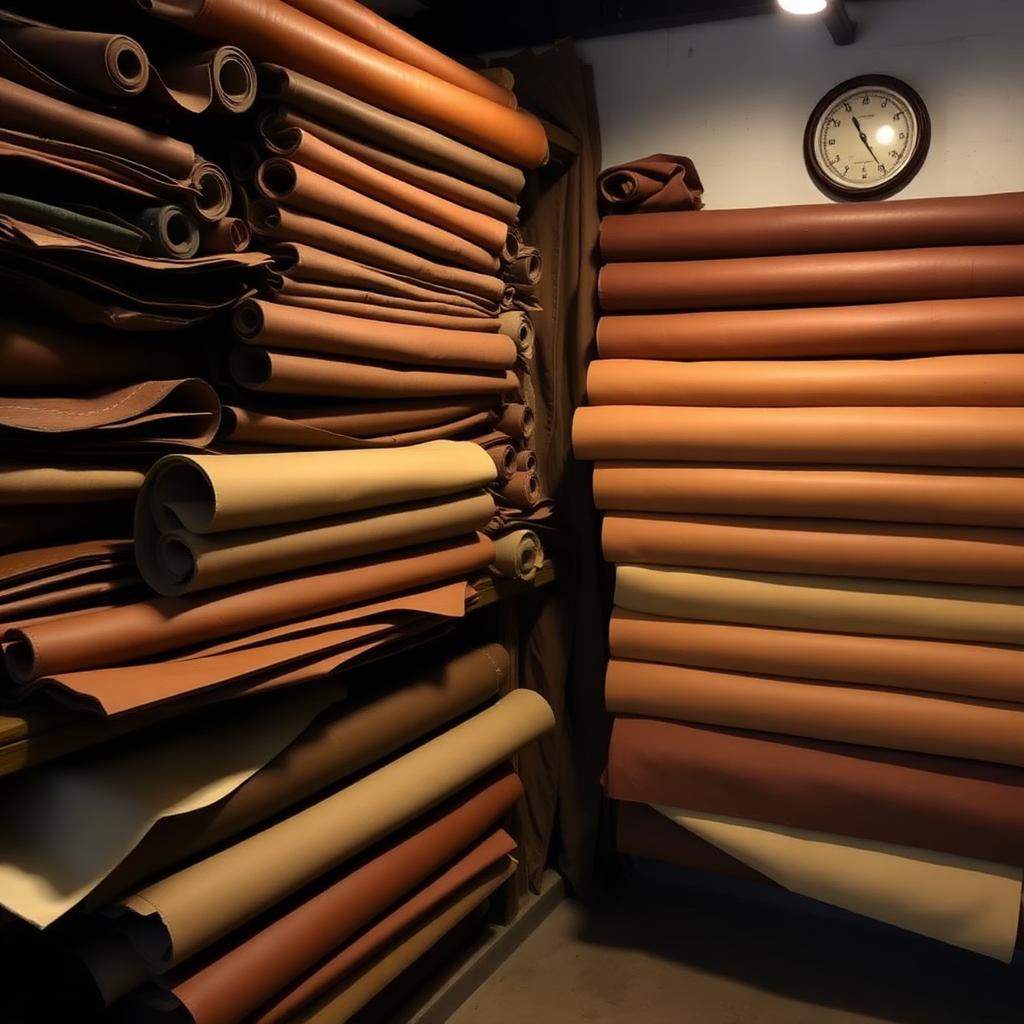
Vegetable tannage uses plant tannins, traditionally from oak, chestnut, quebracho or mimosa bark, in a slow process that can take weeks or months in pits. The result is firm, dense, pale tan leather with a fibre structure that responds to water and pressure.
That responsiveness is what makes it the leatherworker's material. It can be tooled and stamped because compressed fibres stay compressed. It can be wet moulded because damp fibres take a shape and hold it on drying. Its edges burnish to a glassy finish because friction and heat fuse the surface. It accepts dye deeply and evenly, and it develops a patina — darkening and warming with light and handling — that buyers will pay for.
The trade-offs are stiffness, weight, and vulnerability to water marking. A drop of water on an unfinished veg-tan panel leaves a permanent ring. It is also the more expensive tannage by a considerable margin, because the process is slow and the yield of unblemished hide is lower.
Chrome tanned
Chrome tannage uses chromium salts and takes hours rather than months, which is why roughly four-fifths of world leather production is chrome tanned. The result is soft, supple, dimensionally stable leather with excellent water resistance and colour range.
For the maker, chrome tanned leather is the right choice for anything that should drape: bag bodies, garment panels, soft linings, upholstery. It resists heat and moisture, does not water-mark, and comes in colours vegetable tanning cannot reach.
It also cannot be tooled, cannot be wet moulded, and will not burnish — the fibres simply do not fuse. Edges on chrome tanned goods must be painted, bound or turned. Attempting to burnish chrome tanned leather is the most common wasted afternoon in the beginner's calendar.
Combination and speciality tannages
Combination tannages sit between the two. Chrome-retanned leathers are chrome tanned then given a vegetable retan, producing material that drapes better than veg-tan but takes finishing better than pure chrome. Most quality bag leathers you admire are combination tanned.
Oil tanned and waxed leathers are chrome or combination bases loaded with fats and waxes, giving a pull-up effect where the colour lightens where the leather flexes. Latigo and harness leathers are heavily stuffed vegetable or combination hides intended for outdoor strap work.
Brain, alum and formaldehyde tannages exist and matter historically, but you are unlikely to buy them commercially. Shell cordovan — a vegetable tanned equine membrane — is a category of its own, extraordinary and priced accordingly.
Buying decisions and yield
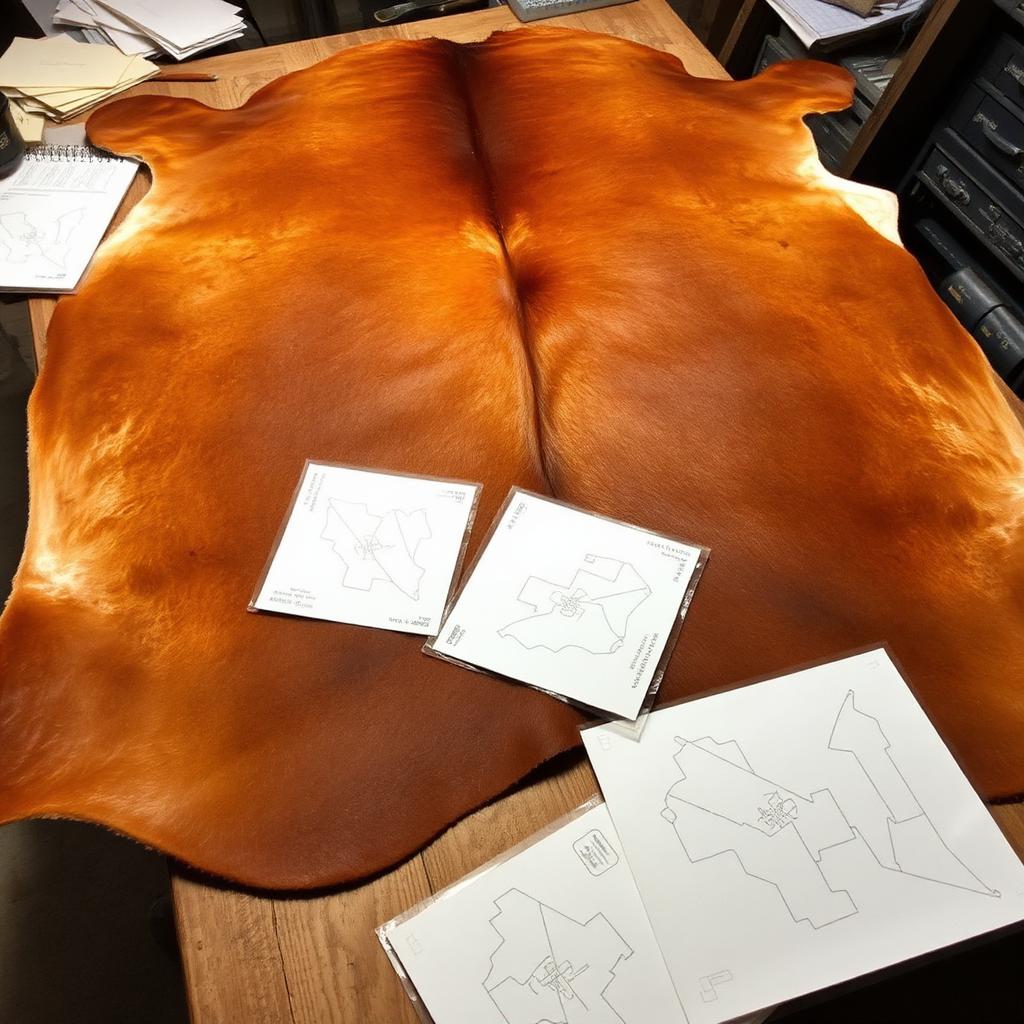
Vegetable tanned hides are usually sold as sides or shoulders in imperial square feet; European suppliers of chrome and combination leathers often quote square decimetres. A side runs 18 to 25 square feet, a double shoulder 12 to 16, and a small goods panel might be 4 to 6. Converting confidently between square feet, square decimetres and square metres saves you from expensive ordering mistakes.
Usable yield varies by tannage as much as by grade. Firm veg-tan from the butt is nearly all usable for straps; the belly is loose and stretchy and should be discounted heavily in your planning. Chrome tanned bag hides are more uniform but have larger irregular outlines.
As a working figure, assume you will use 65 to 80 per cent of a hide's stated area on rectangular panel work, less if your pattern has awkward shapes. Plan the purchase from that number rather than from the stated area, and you will stop running out at the last panel.
Grade also matters more than most beginners expect. An A-grade hide is nearly free of scars, brands, insect bites and healed cuts, and it costs accordingly. A B or C grade hide is often the smarter buy for small goods, because you are cutting little panels and can simply route them around the defects — the effective price per usable square foot can be lower than the pristine hide.
When you buy, ask the supplier for the tannage, the substance range in millimetres, the actual measured area of the piece you are being sent, and whether it is a side, shoulder, bend or belly. Any supplier worth using will answer all four without hesitation, and the answers let you plan a project properly instead of discovering the material's limits halfway through it.
Record what you buy in a simple log: date, supplier, tannage, weight, area, price, and a note on how it behaved at the bench. After a year that log is more valuable than any online review, because it describes materials in terms of your own work.
Tools mentioned in this article
- Leather Consumption Estimator — Estimate the hide area a project needs before you buy leather.
- Leather Area Unit Converter — Convert hide area between square feet, dm² and cm².