Pricing Handmade Leather Goods Without Guessing
4 July 2026 · 9 min read · Material Calculation
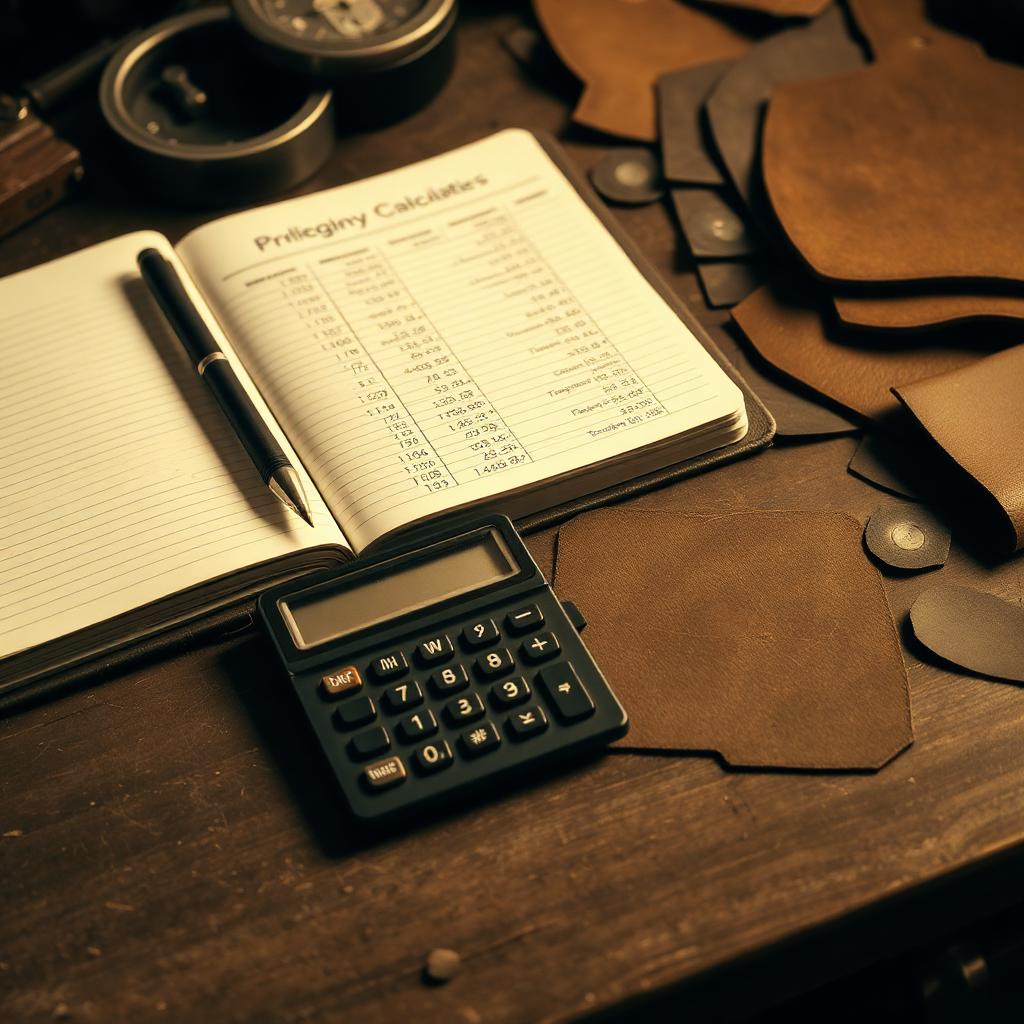
Material cost, waste, hardware, consumables and a real hourly rate. A transparent method for arriving at a price you can defend and survive on.
Why most makers underprice
The characteristic error is to price from the visible material. A maker looks at a wallet, thinks 'that is about two square feet of leather at eight a foot, plus thread, so sixteen', triples it, and arrives at a number that does not cover the hide they wasted, the hour they spent, or the blade they wore out. Then they wonder why a business that sells steadily never accumulates any money.
The fix is not to charge more arbitrarily. It is to count everything, in the open, and then decide what margin you want on a real number. A price you can explain line by line is a price you can hold in a conversation with a customer.
Material cost including waste
Start with the area of leather in the finished object — sum the pattern pieces. Then divide by your realistic yield. If you get 70 per cent usable area from a side, a wallet containing 2.0 square feet of panels actually consumes about 2.9 square feet of purchased hide.
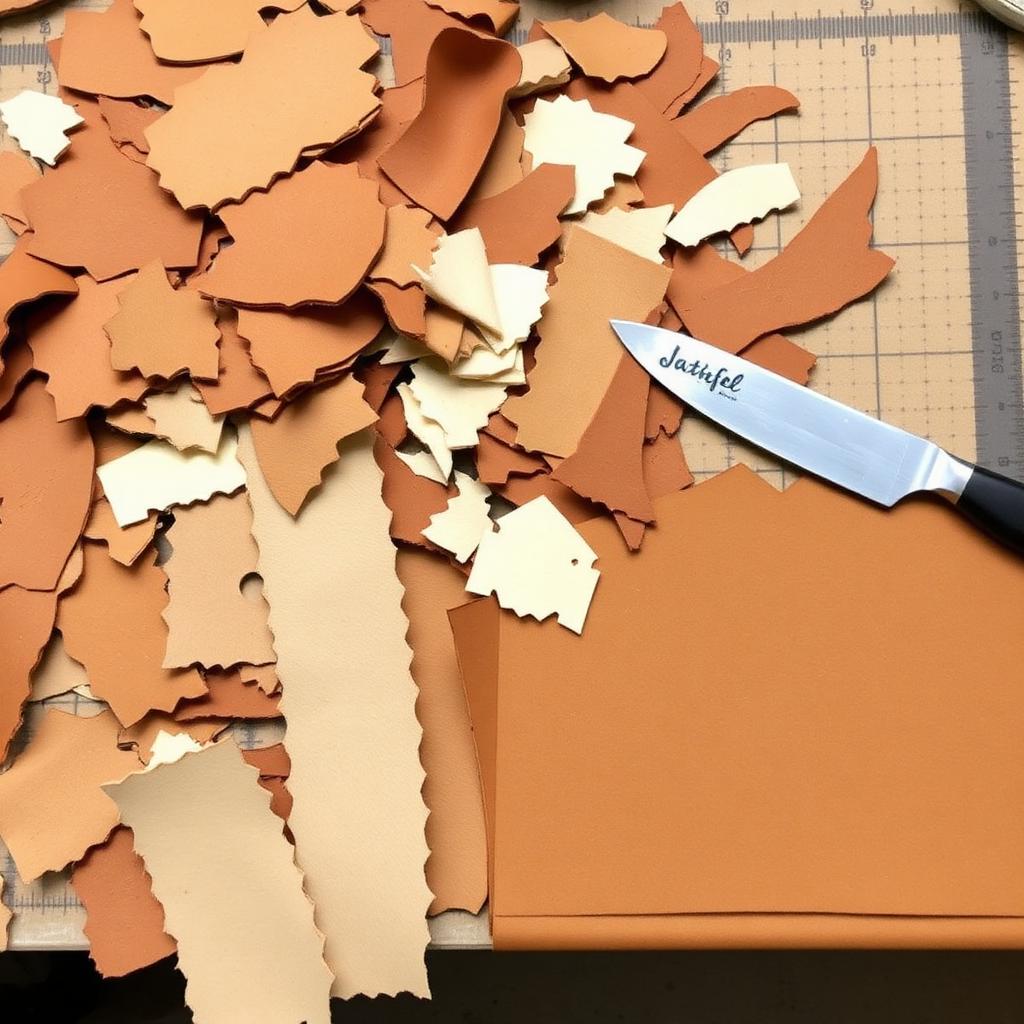
This is the single biggest correction most makers need to make. Waste is not an overhead to be absorbed; it is a direct cost of the piece, because the offcuts exist because of that piece's shapes. Track your real yield by weighing or measuring offcuts for a month and you will get a number specific to your patterns.
Apply the same logic to lining, reinforcement and any interfacing. Then add hardware at unit cost — buckles, rivets, snaps, zips, magnets — counting the ones you will bend and discard.
Consumables and the tools that wear out
Thread, dye, finish, adhesive, blades, sandpaper, edge paint, chisels that need replacing, needles that snap. Individually these are trivial; collectively they run between five and fifteen per cent of material cost for most small goods, and considerably more for heavily finished work.
The straightforward method is to total a quarter's spend on consumables and divide by the number of items made in that quarter. It will be a larger figure than you expect, and it is a real cost that comes out of the same account as everything else.
Amortised tooling is separate and optional. If you buy a five-hundred pound clicker press to make one product, some part of that belongs in the product's cost. Spread it over a realistic number of units and stop.
Time, honestly measured
Time yourself for one complete build, including pattern setup, cutting, skiving, gluing, punching, stitching, edge finishing with its drying pauses, quality checking, photographing and packing. Most makers discover the number is between two and three times their estimate, because they were only counting the stitching.
Then set an hourly rate you can live on, remembering that not all your working hours are billable. If you want to earn a given annual figure, and roughly sixty per cent of your working hours are actually spent making sellable items, your bench rate needs to be substantially higher than your target hourly income.
Multiply time by rate and add it to materials plus consumables. That total is your cost. It is not your price.
From cost to price
For direct sales, a common approach is cost times two to two and a half, which covers marketing, packaging, payment fees, returns, and the profit that lets the business buy leather in advance rather than hand to mouth. For wholesale you need a further multiple, because the retailer needs their own margin — which is why makers who price too low for direct sales can never wholesale at all.
Sanity-check against the market, but do not price from it. If your defensible cost-based price is far above what comparable items sell for, the answer is usually to change the product — simpler construction, better nesting, less hand finishing — rather than to work for nothing.
Write the calculation down for each product and keep it. When leather prices rise fifteen per cent, you will be able to reprice in five minutes instead of avoiding the question for a year.
Two adjustments are worth making deliberately. The first is a batch discount to yourself: making six identical wallets takes far less than six times the hours of making one, because setup, cutting and finishing all batch well. Price from the batch time if you sell in batches, and you will be competitive without cutting into your rate.
The second is a complexity premium. Bespoke sizing, customer-supplied leather, monogramming and one-off patterns all carry hidden hours — correspondence, pattern drafting, the risk of a piece that cannot be resold. Charge for them explicitly as line items rather than absorbing them, both because it is fair and because it makes customers choose what they actually value.
Review your prices on a fixed schedule — twice a year is plenty — rather than reactively. Pull up your cost sheets, update the leather and hardware figures from recent invoices, re-time one build to see whether you have got faster, and adjust. Makers who review on a schedule raise prices in small defensible steps; makers who avoid it end up making one large jump that unsettles their customers.
Tools mentioned in this article
- Leather Consumption Estimator — Estimate the hide area a project needs before you buy leather.
- Cutting Waste Calculator — Measure how efficiently your layout uses a hide.