Reducing Leather Waste: Nesting, Offcuts and Honest Yield
19 May 2026 · 7 min read · Material Calculation
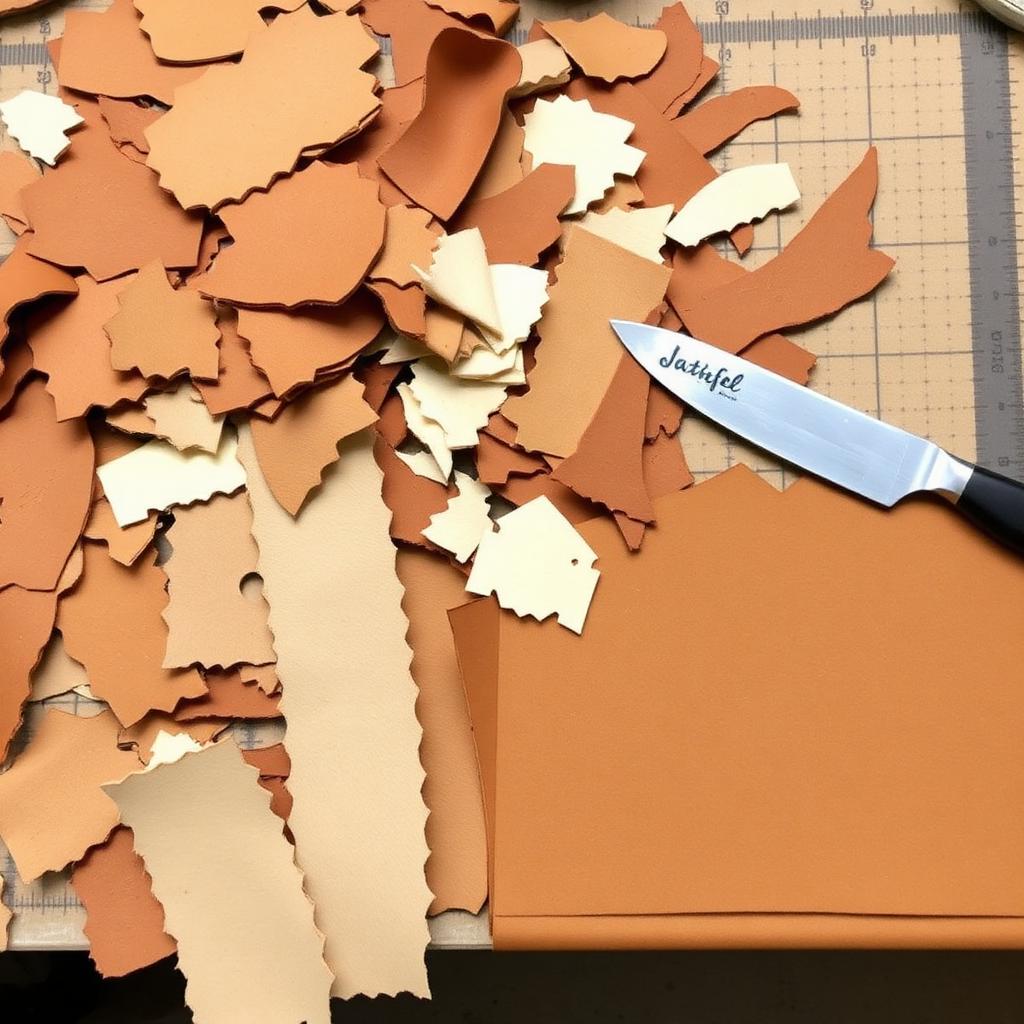
Where the offcuts really come from, how to raise nesting efficiency by ten points, and what to do with the scrap you cannot avoid.
Waste is a cost, not a by-product
In a small workshop, leather is usually the largest single material expense. If thirty per cent of every hide ends up in a scrap bin, thirty per cent of that expense produces no revenue. Improving nesting efficiency from seventy to eighty per cent does not sound dramatic, but on a workshop consuming twenty hides a year it is the equivalent of getting two and a half hides free.
The environmental argument runs alongside the financial one. Every hide represents an animal, a tannery's water and energy, and international freight. Using more of it is simply better practice.
Where the offcuts come from
Perimeter loss is unavoidable. The irregular outline of a hide leaves crescents and points that no rectangular panel fits into. Expect five to eight per cent and plan small items to soak up some of it.
Shape mismatch is the largest controllable loss. Curved flaps and rounded gussets leave concave gaps between them. Two curved pieces nested with their curves facing each other recover much of that space; the same two pieces placed side by side in the order they appear on the cutting list do not.
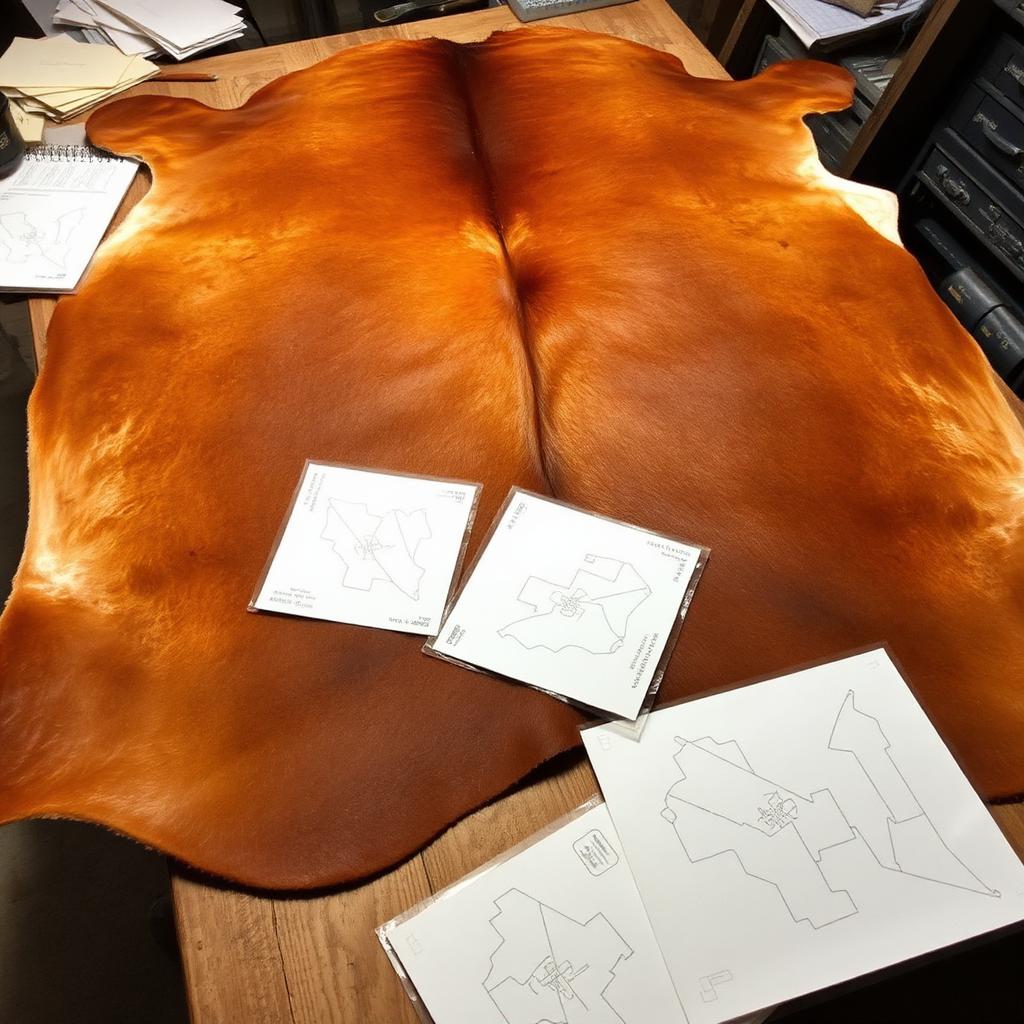
Defect avoidance produces scattered loss. A brand mark in the middle of a prime area forces panels apart and creates an island of unusable leather around it. Mapping defects before cutting, rather than discovering them mid-layout, lets you place small components over the marks where they are hidden.
Finally, thickness zoning. If your project needs firm leather for straps and soft leather for linings, you are effectively cutting two projects from one hide, each restricted to part of it. This is efficient use of the hide overall but it looks like waste if you measure only against pattern area.
Practical nesting technique
Cut acrylic or card templates for every panel. Shuffling physical templates on the hide takes ten minutes and consistently beats mental planning by several percentage points of yield.
Place the largest, most constrained pieces first: back panels, straps that must follow the spine, anything that requires clean unmarked leather. Fill the remainder with progressively smaller items.
Rotate freely except where grain direction matters. Many makers habitually align every template the same way out of tidiness, giving up yield for no benefit. On non-structural pieces, rotation is free.
Nest concave against convex. A curved flap and a curved gusset facing each other share the space between them; facing away they each waste it.
Keep a queue of small filler items — keyrings, luggage tags, cable wraps, coaster blanks — and place them into the gaps at the end of every layout. This alone can lift effective yield by five per cent and produces stock for markets and gifts.
Measuring your real yield
Weigh or measure the scrap after every project and record it against the hide area you started with. Most makers guess their efficiency and most guess high.
Track it by project type. You may find that wallets run at eighty-five per cent and bags at sixty-five, which tells you where to spend your improvement effort and how to price each product honestly.
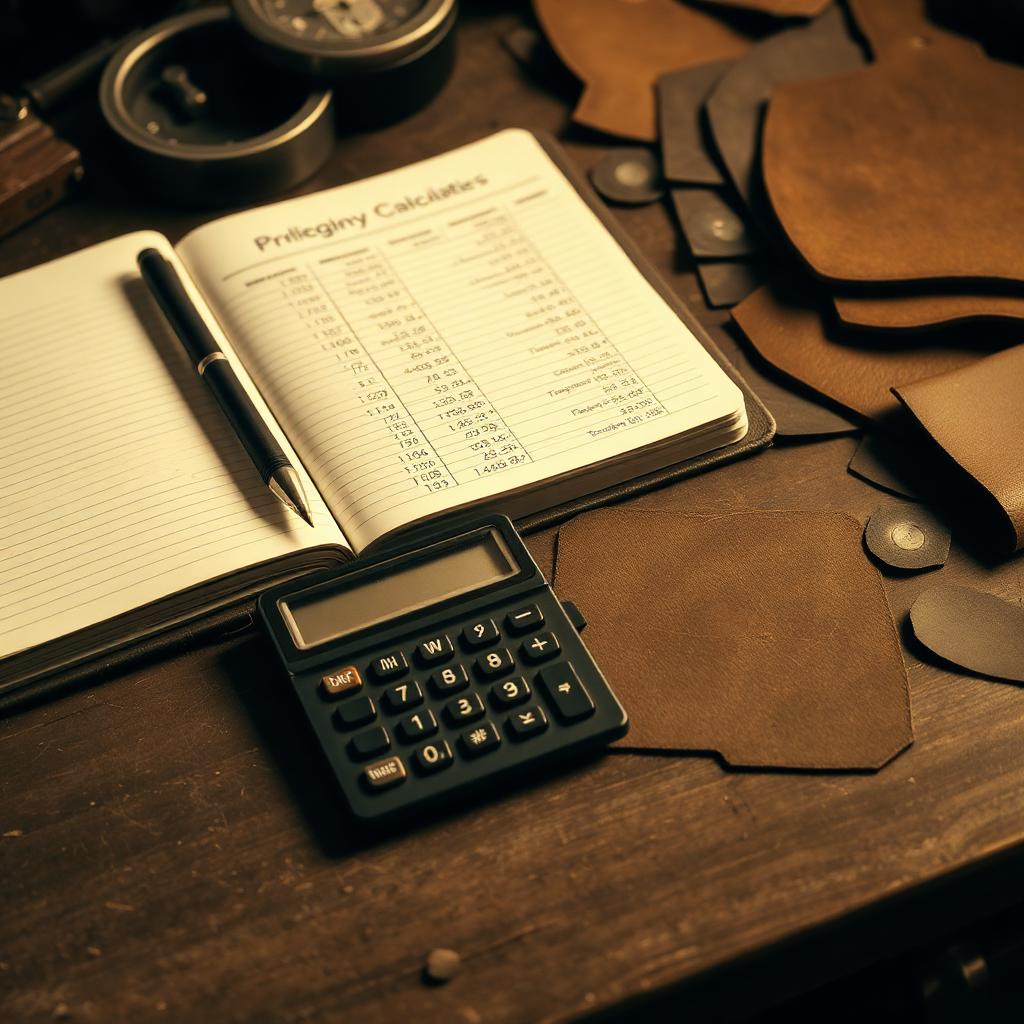
Include waste in your pricing. If a product genuinely consumes 1.4 square feet of hide to yield 1.0 square feet of panels, the material cost is 1.4 square feet. Pricing from pattern area alone quietly erodes margin on every sale.
Using the scrap you cannot avoid
Sort offcuts by size on the day they are created, not months later. Three boxes — large enough for panels, medium for small goods, and strips — take no effort at the time and turn an unusable heap into a resource.
Small pieces make card holders, key fobs, watch strap keepers, tool rolls, patch reinforcements and test swatches. Very small pieces are useful as glue spreaders, burnishing pads and dye test chips.
Genuinely unusable veg tan scrap can be soaked and moulded into leather hardboard, or offered to schools and craft groups who will happily take it. Chrome tanned scrap should go to appropriate waste collection rather than general refuse.
Run your layout through the waste calculator before cutting. Seeing the projected yield percentage before the knife moves is usually enough motivation to spend another five minutes rearranging templates, and those five minutes are the highest-return work in the whole project.