A Realistic Leather Care Schedule for Everyday Pieces
2 June 2026 · 7 min read · Dyeing & Finishing
How often to condition, what climate does to leather, and why over-conditioning damages more pieces than neglect.
Leather is a preserved material, not a sealed one
Tanning stabilises hide so it does not rot, but the finished material remains a network of protein fibres held flexible by oils and moisture. Over time those oils migrate, evaporate and oxidise. The fibres stiffen, and stiff fibres crack when flexed. That is the whole mechanism of leather failure in ordinary use, and conditioning exists to slow it.
It follows that care frequency should depend on how quickly a particular piece loses oils, which depends on use, climate and the leather itself — not on a fixed calendar interval that applies to everything.
What actually drives the interval
Use is the largest factor. A wallet carried daily flexes thousands of times a month and absorbs body heat and skin oils; a briefcase used twice a week flexes rarely. Daily-carry items generally want conditioning every two to three months, weekly items every four to six, and stored or occasional pieces once or twice a year.
Climate is the second factor. Dry environments — heated interiors in winter, arid regions, air-conditioned offices — pull moisture out of leather quickly and roughly halve the safe interval. Humid environments slow drying but bring their own risk in the form of mould on vegetable tanned leather that is stored without airflow.
Leather type matters too. Vegetable tanned leather is thirsty and benefits from regular light conditioning. Chrome tanned leather holds its treatment longer. Oil-tanned and waxed leathers arrive heavily loaded and need very little for the first year or two. Suede and nubuck should not be conditioned with creams at all — brushing and a protective spray are the correct care.
Over-conditioning is real damage
The most common harm inflicted on leather by well-meaning owners is too much conditioner. Excess oil saturates the fibre structure, and saturated leather goes soft and loses its ability to hold shape. A structured bag treated monthly with a heavy balm will slump within a year and never recover; the fibres have been lubricated past the point where they support one another.
Excess conditioner also darkens leather unevenly and can bloom to the surface as a waxy film in cold weather. On light tan veg tan, a single overenthusiastic application can permanently darken the piece by two shades.
The test is simple: press a thumbnail lightly into an inconspicuous area. If the leather feels dry, papery and resists the impression, it needs conditioning. If it feels supple and takes the impression easily, it does not. Do this before every treatment rather than working to a calendar alone.
A workable routine
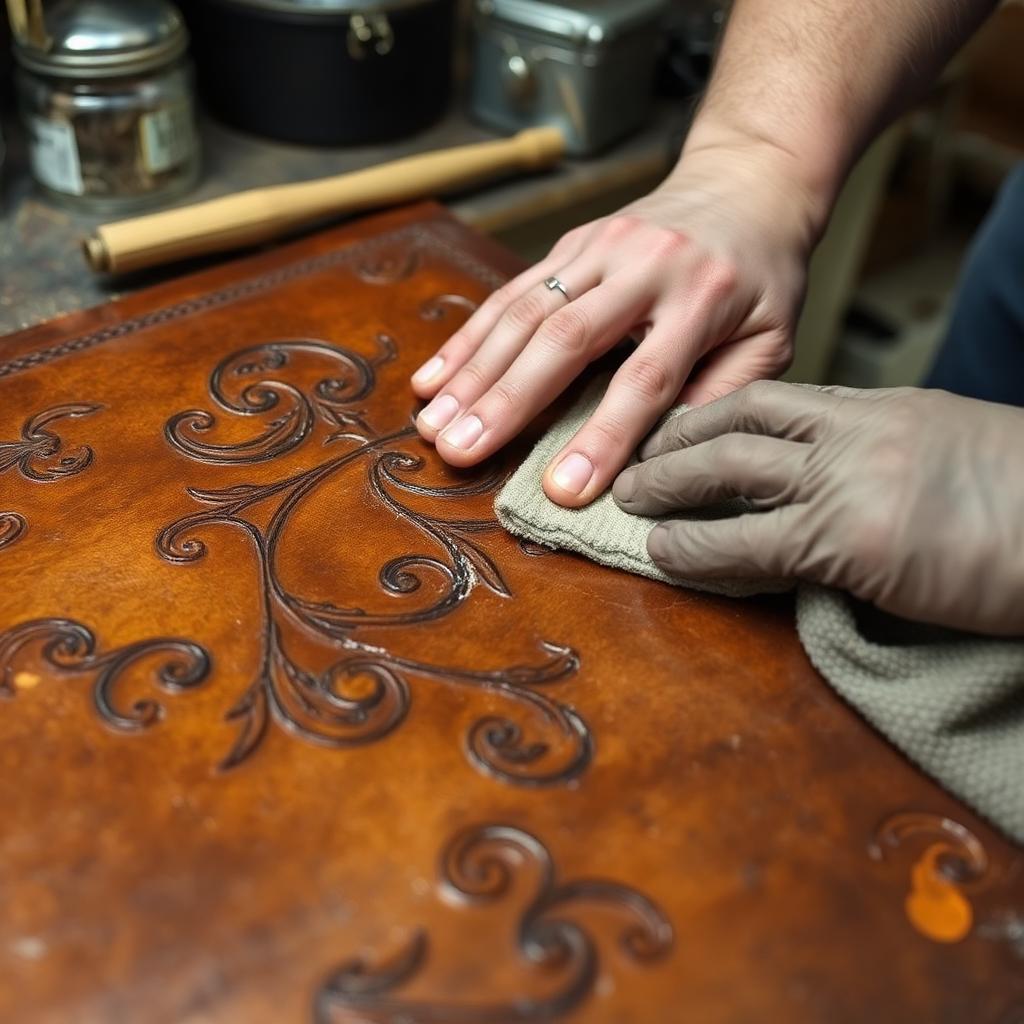
Clean first. Conditioner applied over surface dirt drives that dirt into the fibres. A barely damp cloth is enough for most pieces; use a dedicated leather cleaner only when there is visible soiling.
Let the piece dry completely at room temperature, away from radiators and direct sun. Heat drying is what causes the hard, brittle patches often seen around the base of bags that were dried too aggressively after rain.
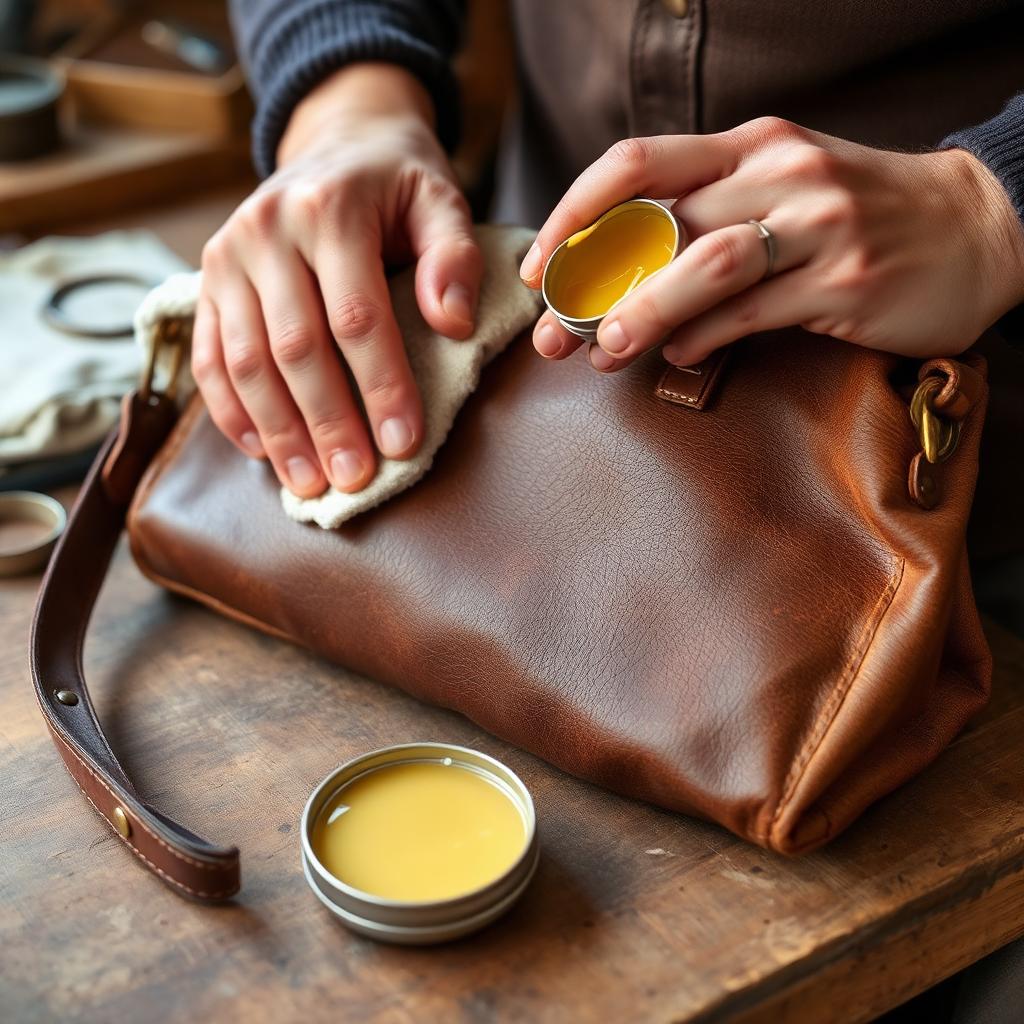
Apply conditioner sparingly with a cloth, in thin coats, working in circles. Less than you think is right. Let it absorb for twenty to thirty minutes, then buff off whatever remains on the surface — anything still sitting there was surplus.
For water resistance, a wax-based finish over the conditioner adds protection on outdoor pieces, but reapply it seasonally rather than continuously.
Care as part of the product
If you sell your work, supply a short care card with each piece. Tell the customer the leather type, the recommended interval for their expected use, and specifically warn against over-conditioning. Most leather goods that come back for repair have been either neglected entirely or treated far too often, and a card prevents both.
Keep a record for your own pieces too. A note in a phone calendar with the date and product used is enough to reveal, over a couple of years, how your particular leathers behave in your particular climate.
The care interval tool on this site produces a recommended schedule from the leather type, usage frequency and climate, which is a more useful starting point than the blanket 'every six months' printed on most tins.