Hand Stitching Versus Machine: Strength, Speed and Honest Economics
5 August 2026 · 10 min read · Stitching & Hardware
The saddle stitch is genuinely stronger than a lockstitch, and that fact is genuinely irrelevant to many products. Here is how to decide which seam belongs on which item.
Two different seams, not two speeds of the same seam
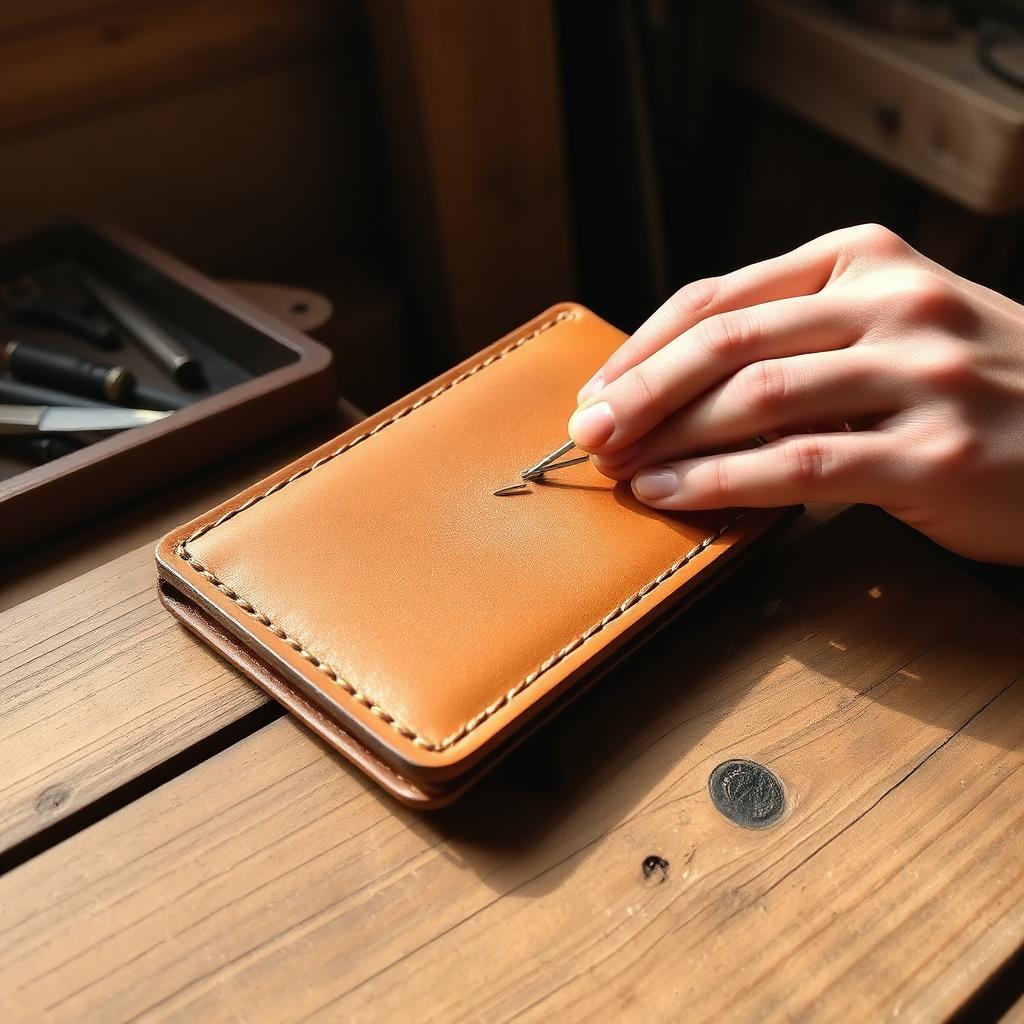
A machine lockstitch and a hand saddle stitch are structurally different objects. The lockstitch uses two threads, an upper and a bobbin, which interlock in the middle of the material. The saddle stitch uses one thread with a needle on each end, and both needles pass through every hole in opposite directions, so each hole contains two full passes of thread that wrap around each other.
The practical consequence is well known: cut a lockstitch and the interlock unravels progressively, because the two threads are only holding each other. Cut a saddle stitch and it stays put, because each hole is independently locked by two crossing passes.
That single fact drives the entire romance of hand stitching, and it is true. It is also less decisive than it sounds, because most seams do not get cut, and a well-made lockstitch in bonded polyester on properly specified leather will outlive the leather itself in ordinary use.
Where hand stitching genuinely wins
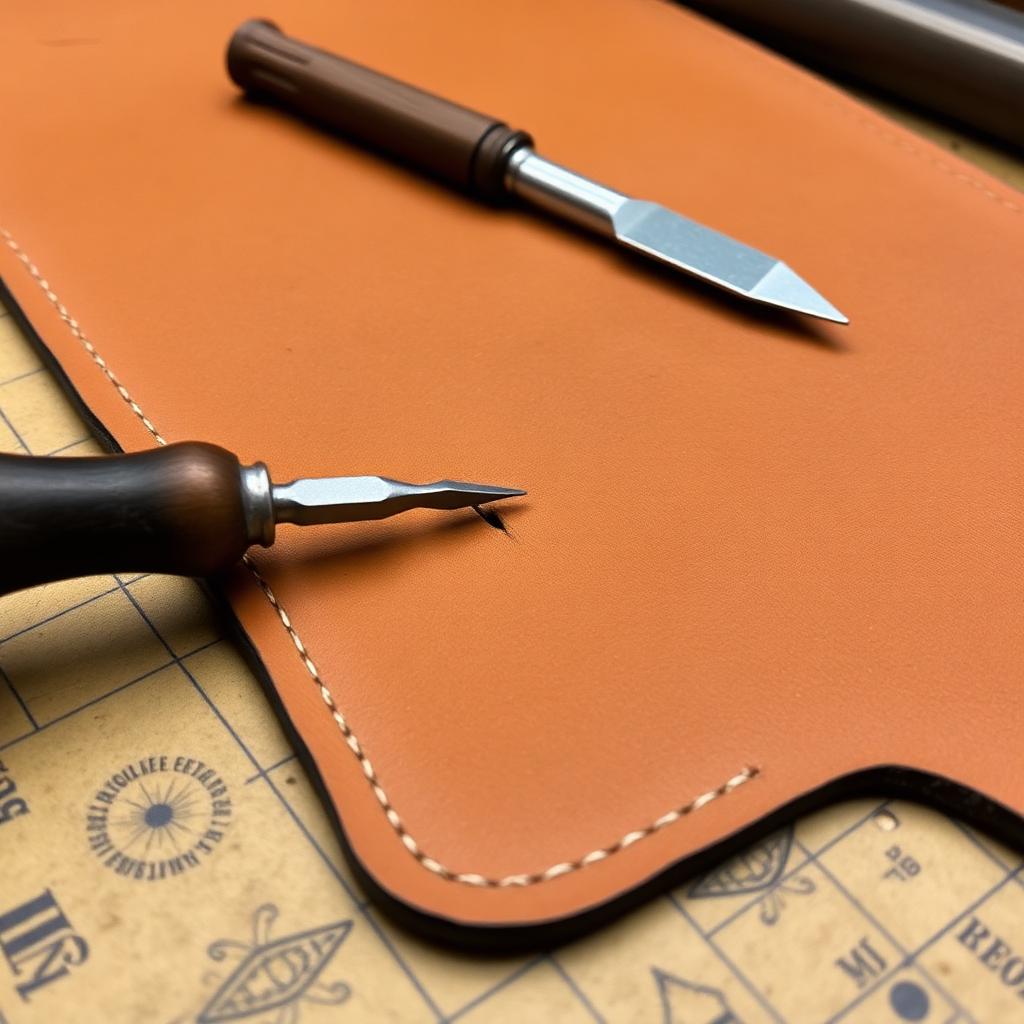
Thick stacks are the clearest case. Machines that will sew 8 mm of firm vegetable tan reliably are expensive industrial units with specific feed mechanisms, and even then the stitch quality on a curved heavy strap can be poor. A hand stitch with an awl handles the same stack with a pony and patience.
Awkward geometry is the second case. Anywhere the seam runs into a corner, around a tight internal curve, or into a closed assembly the machine's arm cannot reach, hand stitching simply goes where the machine cannot. Many bags are machine sewn for the long runs and hand finished at exactly these points.
The third case is the visible aesthetic. A saddle stitch presents a slanted, alternating stitch on both faces, and on a well-executed run it reads unmistakably as handwork. For an object whose value is partly the evidence of the hand that made it, this is not decoration but the product itself.
Where the machine wins
Speed, obviously, but the magnitude surprises people. A competent hand stitcher manages roughly one to two stitches per second on a good run, and considerably slower with an awl. A machine does several per second and does not need the holes punched first. On a long seam the difference is not twenty per cent; it is an order of magnitude.
Consistency is the second advantage. Machine stitch length is mechanically identical along the whole run, including through thickness changes, and no amount of hand skill fully matches it on a two-metre seam. For products where uniformity reads as quality — structured bags, garment leather, upholstery — the machine looks better, not worse.
Then there is thin and soft material. Chrome tanned garment leathers and linings are difficult to hand stitch well because the holes distort and the thread cuts into the surface. These materials were designed around machine sewing and behave properly there.
The economics without illusions
Work it out per item. Take the total seam length, divide by stitch spacing to get hole count, and apply a realistic rate. At 3 mm spacing, a metre of seam is about 333 holes; at one stitch per second with no interruptions, that is five and a half minutes of pure stitching, and realistically closer to ten with setup, thread management and the two ends.
Now add hole punching, thread cutting and waxing, and price your own time honestly. A hand-stitched messenger bag can easily carry six to eight hours of stitching alone. If the market price for that bag does not comfortably absorb eight hours of skilled labour on top of materials and every other operation, the product is not viable as a hand-stitched object.
This is not an argument against hand stitching. It is an argument for choosing it deliberately, on items where the customer is buying it, and pricing accordingly. Small goods — card holders, watch straps, wallets — carry hand stitching economically because the seam lengths are short and the perceived value density is high.
Thread and needle choices differ too
Hand stitching uses relatively thick thread — commonly 0.45 mm to 1.0 mm — with blunt harness needles that pass through pre-made holes without piercing the thread already there. The blunt point is essential; a sharp needle will split the returning thread and produce a weak, ugly stitch.
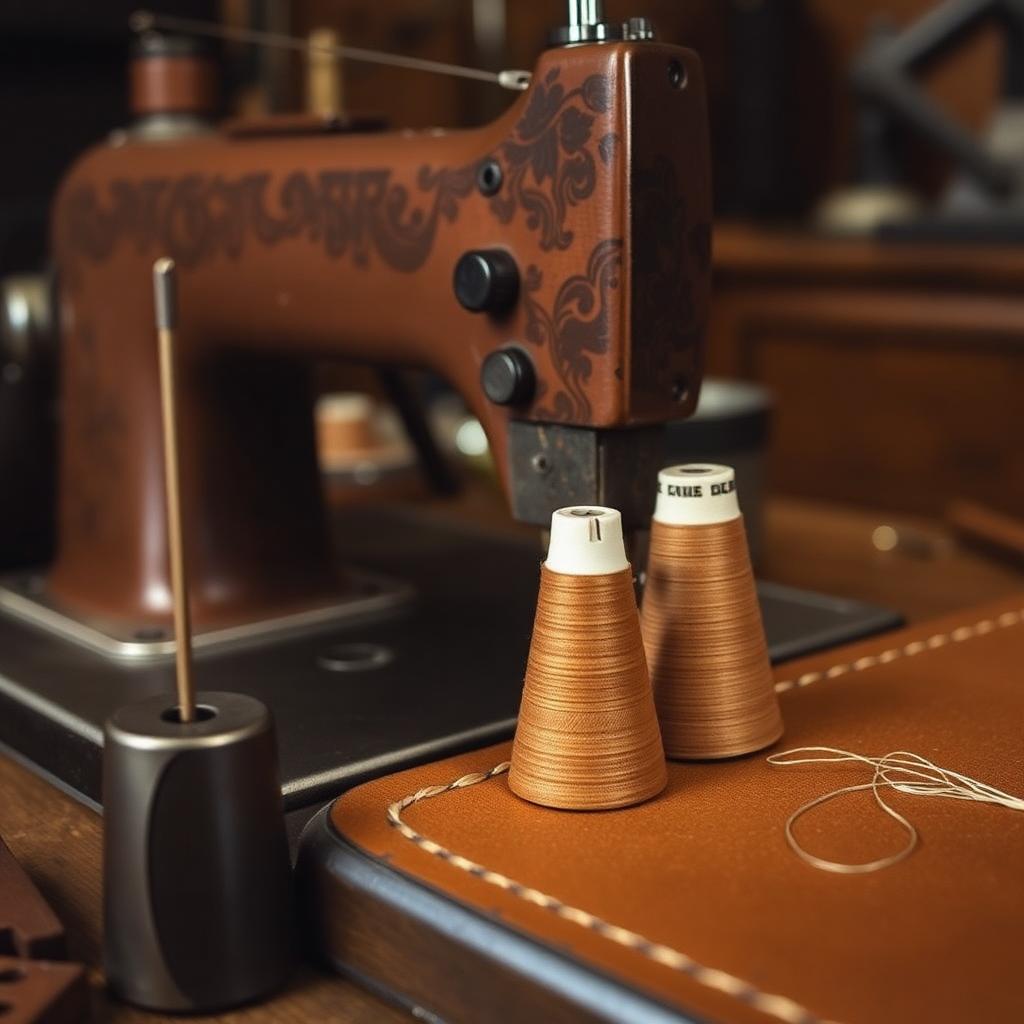
Machines use finer bonded threads and sharp needles with specific point geometries. A leather point needle is faceted to cut a small slit rather than punch a round hole, and the facet orientation determines whether the stitch line looks straight or slightly zigzagged. Matching needle size to thread size to material is a whole discipline of its own.
You cannot simply run hand-stitching thread through a machine. The diameter, the wax and the twist are wrong for the tension mechanism and the bobbin case. If you want the visual weight of thick thread from a machine, you need a machine rated for it and the correct needle system.
Planning thread quantity either way
Hand stitchers must cut a length before starting, and the calculation is unforgiving: too short and you have to splice mid-seam, too long and you waste thread and fight tangles on every pull. The standard rule of thumb is around three and a half to four times the seam length for a saddle stitch, plus tails at both ends, adjusted upward for thick stacks where each pass travels further.
That multiplier is only a starting point. Thicker leather means more thread consumed per hole; wider spacing means fewer holes but longer diagonal runs. The thread length calculator on this site takes seam length, spacing and stack thickness and returns a figure with the tail allowance included.
Machine sewists have the opposite problem — estimating cone consumption across a production batch for ordering purposes. The same per-stitch arithmetic applies, just aggregated. Either way, knowing the number before you start is the difference between a smooth session and an improvised one.
A pragmatic hybrid
Most working shops that own a machine still hand stitch. The common division is machine for internal seams, linings, long straight runs and anything hidden; hand for visible top stitching, stress points, thick strap attachments and closing seams the machine cannot reach.
This is not a compromise so much as correct tool selection, and customers rarely object once it is explained plainly. What they object to is discovering that a piece sold as hand stitched was not.
If you are choosing your first serious upgrade, be honest about what you make. A maker of wallets and belts will get more value from better irons, a proper pony and a good awl than from a machine that mostly gathers dust. A maker of bags and totes reaches the opposite conclusion within a year.
Tools mentioned in this article
- Stitching Thread Length Calculator — Work out how much waxed thread a saddle-stitched seam really needs.
- Stitch Hole Spacing Calculator — Balance stitch holes across an edge with even end margins.